Why Exercise May Be the Most Powerful Longevity Tool We Have
In conversation with James Goodlatte
One of my favorite parts of hosting the Re-Think Aging podcast is getting to learn from people who are deeply committed to helping others live stronger, healthier, more vibrant lives. In this episode, I had the pleasure of speaking with James Goodlatte, a certified professional trainer, longevity coach, and founder of Fit for Freedom.
James brings more than 25 years of experience in fitness, corrective exercise, and movement education, and I have personally benefited from his work. He is also my core muscle trainer, and I can honestly say that what he has taught me about breathing, posture, and movement has made a meaningful difference in my own health and fitness.
What stood out most in our conversation is this: if we want to protect our healthspan and longevity, we cannot overlook exercise. In fact, James said something that really captured the heart of the episode:
“Exercise is being identified… as probably the number one correlative to longevity that we know about in the research today.”
That is a striking statement, and one worth pausing over.
Exercise and longevity: more than just living longer
When we talk about longevity, we are not simply talking about extending lifespan. We are talking about extending healthspan too. As James put it, longevity is not about “living longer and suffering.” It is about being able to “die peacefully in my sleep one day,” rather than enduring years of decline, disability, or chronic disease.
That distinction matters.
So often, people think of exercise as something optional or cosmetic. But the research increasingly points to movement as foundational. James highlighted that while nutrition science can still be debated from many angles, exercise remains one of the clearest and most consistent predictors of better long-term health.
He shared that markers like strength and cardiovascular fitness are strongly associated with longevity. Grip strength, for example, is not important because of the hand itself, but because it acts as a proxy for overall strength. Likewise, VO2 max—our body’s ability to utilize oxygen efficiently—is a powerful indicator of cardiovascular health and resilience.
In other words, exercise is not just about appearance or performance. It is about preserving function, vitality, and freedom.
Start with function before intensity
One of the things I especially appreciate about James’ approach is that he does not start by pushing people harder. He starts by helping them move better.
He talked about the importance of finding “the answer under the answer.” Rather than simply telling people to lift weights or exercise more, he begins with assessing how the body is functioning. Are you breathing properly? Are the right muscles firing? Are you stabilizing your spine well? Are you using your glutes, or are other muscles compensating?
As he explained:
“We don’t want to strengthen poor muscle activation… We want to first restructure and then strengthen that.”
I love this perspective because it is both practical and compassionate. Many people in midlife feel intimidated by fitness, especially if they are already dealing with aches, pains, stiffness, or fatigue. But James’ framework reminds us that exercise does not have to begin with intensity. It can begin with awareness.
He teaches what he calls the “six primal movements”: squat, lunge, bend, twist, push, and pull. These are the movement patterns we use in daily life. If we are not doing them well, then layering more exercise on top of dysfunction may simply lead to more pain or wear and tear over time.
That is why corrective exercise matters.
Core breathing: a foundational skill for health
One of the most eye-opening parts of our conversation was our discussion on breathing. I came into this work already familiar with diaphragmatic breathing, but James has taught me important nuances that have helped deepen my understanding.
He explained that the diaphragm is one of only two muscles in the body that, if it stops working, we die within minutes. The other is the heart. That alone should remind us how central breathing is to our well-being.
When the diaphragm is not functioning properly, the body compensates. Posture shifts. Muscles tighten. Stress patterns increase. Pain can develop up and down the kinetic chain.
James put it this way:
“When the diaphragm doesn’t do its full job, your brain will literally start going through a series of events to be like, ‘Oh my gosh, I’m at risk.’”
Healthy breathing is not just about relaxation. It is also about stability, strength, and protection.
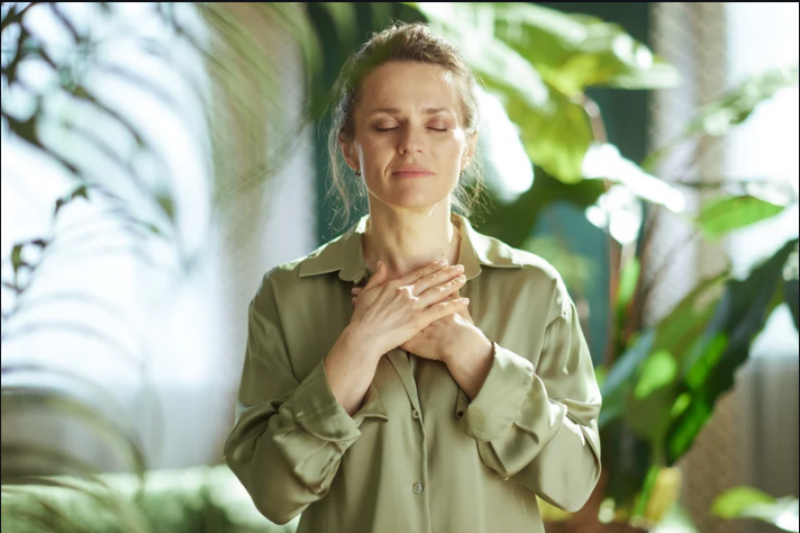
He described diaphragmatic breathing as allowing the torso to expand on the inhale—through the ribs, lower back, and abdomen—and then gently drawing the abdomen smaller on the exhale. From there, core breathing builds on that foundation by using the breath to create stability during movement.
This is so important. If we do not know how to coordinate breath with movement, we often default to overusing our neck, back, or other compensatory muscles. Over time, that can contribute to pain and dysfunction.
The beautiful thing is that this can be learned. It may take repetition and intentionality, but it can become automatic. I have found that to be true in my own life.
Why this matters for the bigger picture of aging well
At Caring for the Body and through Re-Think Aging, my mission is not simply to help people live longer. It is to help people become good stewards of their bodies so they can flourish in body, mind, and spirit.
That is one of the reasons this conversation meant so much to me.
The broader longevity movement can sometimes become self-focused—centered on optimization for its own sake. But for me, the goal is deeper. We care for our bodies so that we can show up for the people we love, live out our calling, and remain available for the good works God has prepared for us.
James and I also spoke about this shared conviction. He said:
“The temple of the Holy Spirit… you’ve got to treat it right. Not only so that you can enjoy life, but so that you can do God’s will on the earth.”
Yes. Exactly.
This is why health behaviors matter. Not because we are striving for perfection, but because we want to remain free, capable, and present.
Tie your health habits to your “why”
One of my favorite moments in the episode came when we talked about motivation.
James shared that one of his personal “whys” is wanting to be able to throw his future grandchildren up in the air at the beach just like he did with his children. I love that image. It is vivid, joyful, and deeply human.
We all need that kind of vision.
It is easy for health habits to start feeling like one more burden on a long to-do list. But when we connect them to the life we want to live—to playing with grandchildren, serving our families, traveling well, getting up off the floor with ease, or simply maintaining independence—they become much more meaningful.
As I shared in the episode, I want to be “the best nana ever eventually,” and I want to be able to roll around on the ground and play with my grandkids. That vision makes the daily disciplines feel purposeful.
James said it beautifully:
“Fit for freedom… that’s the whole concept behind it… so you can remain free.”
That is what we are after.
A simple place to begin
If all of this feels like a lot, let me encourage you: start small.
James’ advice was simple and powerful. If there is only one thing you do, begin with breathing.
“If the only thing that any listener does from this is go away and start to breathe diaphragmatically… that will go so far for your health.”
That is a wonderful place to begin.
Slow down. Breathe through your nose. Let your torso expand gently. Exhale and let your abdomen draw in. Practice becoming aware of your body. Build from there.
Little by little, these “deposits in your longevity bank account,” as I called them, begin to add up.
Listen to the full episode
You can listen to the full episode here: https://www.youtube.com/watch?v=Fg5MR8hdSFk
And you can learn more about James Goodlatte and his work at exerciseforlongevity.life.