You're Tired — But Not Just Because You Need More Sleep
By Dr. Cynthia Libert, Functional Medicine Physician | Caring for the Body, Center for Functional Medicine
If you've ever gone to bed early, slept eight hours, and still woken up exhausted — you're not imagining it. And you're not alone.
This is one of the most common things I hear from patients. "Doc, I'm doing everything right, but I'm still so tired." That was also the question my guest, Dr. Saundra Dalton-Smith, found herself asking as a physician. She checked her labs. Everything looked fine. But she was depleted.
That question — what type of tired am I? — led to her landmark book Sacred Rest, her TED Talk, and a framework that I have personally incorporated into my own self-care and recommend often to my patients.
The answer she discovered is that we don't just need more sleep. We need more rest. And those are not the same thing.
The Seven Types of Rest
Dr. Dalton-Smith identified seven distinct types of rest: physical, mental, spiritual, emotional, social, sensory, and creative. Most of us are deficient in several — without even knowing it.
Here are a few that I find particularly relevant for the high-achieving, high-performing adults I care for.
Creative Rest
When people hear "creative rest," they often assume it means taking a break from making things. But as Dr. Dalton-Smith explained, a creative rest deficit shows up any time you're solving problems, thinking outside the box, generating ideas — or even just trying to creatively manage a complicated schedule.
"If you're pouring energy out, eventually that bucket gets depleted. It gets empty. And that's what creative rest does — it pours back into that creative bucket."
Creative rest is replenished by anything that genuinely inspires you. An art museum, music, time in nature. Research shows that 60 to 70 percent of people report a sense of restoration when they're near bodies of water. I've known for years that getting out into the mountains, clearing my head on a hike, not turning on problems — it genuinely renews me. Now I have a name for what that is.
Physical Rest
Physical rest is about more than stopping. It's about actively undoing the wear of the day.
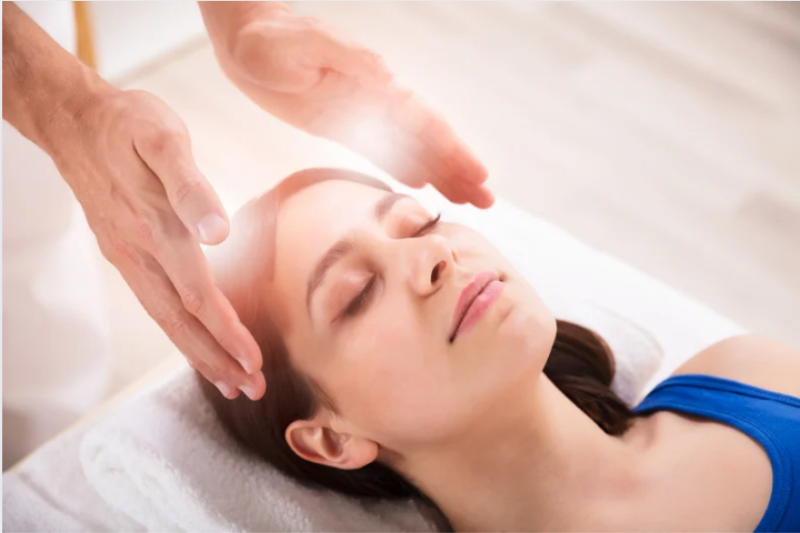
There are passive forms — naps, rest days, sleep. But there are also active forms, like stretching, gentle walking, or simply being aware of how your body is positioned at your workstation. Massage, chiropractic care, infrared sauna, red light therapy — these all count.
One thing Dr. Dalton-Smith said that stayed with me: a sedentary lifestyle is now considered as dangerous as smoking. For people who are retired or desk-bound, simply adding gentle movement — dancing, Tai Chi, anything that builds balance and coordination — can be protective in more ways than one. It isn't about looking a certain way. As she said, "It might keep you from falling and breaking a hip."
Sensory Rest
We are in a state of chronic sensory overload. Devices, notifications, background noise, blue light at all hours. And that overload has real psychological consequences — irritability, anxiety, a persistent feeling of being wound up.
"Could it potentially be because you're also chronically stimulated?"
Dr. Dalton-Smith's practical suggestion: noise-canceling headphones with nothing playing. Just silence. Even five to ten minutes can provide a genuine neurological reset. Between patient visits, I try to step outside, even briefly — sun, a few trees at the edge of the parking lot, a couple of quiet laps. It does more than you'd think.
Mental and Spiritual Rest
Mental rest is disrupted when we can't stop processing — replaying conversations, rehearsing worries, running worst-case scenarios. The brain stays in a loop it was never designed to sustain.
One technique Dr. Dalton-Smith shared is what she calls a "word chair" — a single word or phrase that becomes an anchor for runaway thoughts. For her, the word is faithful. When her mind starts spinning, she brings it back to that one truth she knows to be real in her life.
I shared one of my own life verses with her in response — Romans 12:2: Be transformed by the renewing of your mind. It's the same principle. You train your brain to return to something true rather than letting it run down every anxious path.
Spiritual rest, she explained, is at its core the need for belonging and purpose. For those who share a faith foundation, it also includes intimacy with the God who placed that purpose in you. "I don't feel like science and spirituality are exclusive of each other," she said. "They actually work together." That has always been my conviction as well.
Where to Start
If you've never thought about rest this way, Dr. Dalton-Smith offers a free rest deficit quiz at restquiz.com — and to date, over half a million people have taken it. I send patients there regularly. It's a gentle, honest place to start.
Her books — Sacred Rest and her most recent, Being Fully Known — go deeper into both the science and the spirituality of restoration. I've read Sacred Rest myself, and it has genuinely shaped how I approach self-care and disease prevention as I age.
Because here is what I know: when we're depleted, every other pillar of health suffers. Sleep quality, cognitive function, hormonal balance, immune resilience — rest underlies all of it. Taking it seriously is not indulgence. It is stewardship.
Ready to take a root-cause approach to your health? Start with a free strategy session with the Caring for the Body team.
Whole-person care. Science-backed. Faith-informed.
This post is adapted from the Re-Think Aging podcast. You can listen to the full episode here: https://www.youtube.com/watch?v=DO871OVyGe4